Oh, yes...Back to my job as a partner with Roger Evans in Tri-Valley Contractors. During the time we worked together, we divided up the jobs between us and then coordinated our labor to get them done. Most were small jobs, room additions and small commercials. We definitely weren't getting rich quick. We paid our suppliers on time and paid our labor well. All things that other contractors neglected to do whenever they had a chance.
Finally, in 1976, I had enough. It was time for a change. A Big Change. I decided to see what kind of life was available for us as a family, beyond the Los Angeles 'sphere of influence'. So I drove north one day; driving on US 395, a very familiar road for me. I stopped at Bishop and looked around. I liked Bishop, but it was going to be a hard sell to the family. It is somewhat bleak looking. In the back of my mind, I knew that Rick Thompson, my partner's former partner, had settled in Bishop. Hmm? Wonder where he lived? I spent the night there and in the morning, I moved on, passing through Bridgeport (Where I really wanted to live!) and then into Nevada; going through Minden/Gardnerville, Carson City. Finally I passed through Reno, still heading north. And this was now a part of the highway I had never seen before, so I paid attention to all of the new sights.
About an hour after leaving Reno, I drove into Long Valley in the Doyle area and I could see a valley and a lake ahead of me with mountains on my left. Interesting. The signs said that Susanville was about 30 minutes away. That would be my stop for the night.
Monday, June 11, 2007


Saturday, May 05, 2007
What a memory!
Oops! I did it again. I got my memories out of order. The last post should go sometime after this one... 
Just before I left Pacific States Plastering to partner with

Once we began the job we were contacted by almost every subcontractor that had been stiffed by the original developer. All wanted a chance to recover some of their losses. And one of those subcontractors was Regent
OK, back to Regent; as a manufacturer of spray rigs, he had no equal and his machines were the fastest around. At this time, spraying was a very lucrative business to be in and Regent had hired some fast nozzle men to cash in on the boom. A nozzle man, one hose puller and a man on the ground, mixing, could spray 84,000 square feet in just under 4 hours. Not bad
More later…
Tuesday, May 01, 2007
Career Move
During the middle of the 70’s, I decided to take a risk and go into business with a friend,
He already had one good client, Blue Ribbon Builders, a home remodeling contractor and so we jumped right into that market. I became the estimator and the taper, while
Then I got a call from a taper that I had known a long time ago. He was now an “entrepreneur”, working from a small office in
Mann Theatres was expanding from their traditional
Sunday, April 29, 2007
Lessons
The Baptist project was a great learning experience for me as it refined my supervisory skills. I watched the general contractor in action and learned a lot from him. He rarely lost his temper and never yelled at his crew. Yet he was very much respected. I thought it was because he respected them as well and so I emulated him as best I could. It was a good lesson and later I was told by some of my crew that they felt the worst when they knew that they had failed to meet my expectations. I hadn’t yelled at all, never said a word, but they knew. And they tried to make certain it didn’t happen again.
Friday, April 13, 2007
Now, back to the 70's
And back to the Baptist Home for the Aged.
And right across the street from the construction site was a Baptist church; where we held the weekly progress meetings. The superintendent explained that we were meeting in the church because, “Maybe you $#?#@?}&’s won’t lie to me here when I ask you when you will finished.” Actually, I don’t think anyone was brave enough to lie to him. This project was fast tracked and we were all making money because of it. Even the meetings lasted no more than 15 minutes and then we were told to get out and get back to work!
Another memory; one morning it was noted that the concrete trucks had to make two turns instead of one when backing in to the site. A car was parked (legally) in a space that made a second turn necessary for the big trucks. I was with the superintendent at the time he noticed it, up on the 10th floor. He used his radio to call the crane operator and a man on the ground. In a few minutes, the crane swung over and the trolley went out to a spot directly over the offending car. The hook was lowered and attached to a sling around the rear of the car. Signals were given and the car slowly moved away from its parked location and out into the street. Hook and sling were removed and the trucks began moving into the yard much faster. Yes, the owner of the car got a ticket for being improperly parked.
Wednesday, April 11, 2007
Back to the Future
I missed it! I had been watching the downtown University area location where Turner Construction was building something. I had watched the pile driving and the pouring of the footings. I had seen the electricians and plumbers doing their underground work. What kind of building was going up here? I didn’t know and didn’t really care; I was simply interested in the work itself.
A retired construction worker. A sidewalk superintendent. That’s what I am. And I had missed the arrival and the erection of the steel frame. Darn! Back in the day; the steel arriving meant that the job was really on its way. There would soon be form and substance to the project. And so there is and I missed it.
There are still some miscellaneous pieces to be placed, but the substantial frame work is complete. The building has been ‘rattled’ and the decking spread and pinned. Edge angle and support clips will be welded into place pretty soon.
This is the stage of construction where I was usually called to get a crew on the site and get busy. There would be support clips to weld on the outside edge of the frame. And once the concrete was poured on the floor of the second story, our fireproofers could begin to spray Monokote on the beams and columns that supported that floor. We would follow the concrete on up the building, always just one floor behind.
Obviously I need to pay more attention...
Tuesday, April 10, 2007
Back to the Baptist Home for the Aged…
Since I wanted this to be a very profitable job, I tried my best to change the way we normally worked. I knew that you could always get more done when working by yourself and so I assigned my crew to tasks that could always be done by just one person. As the foreman and the one doing all of the layout work, I had a special obstacle to overcome. Who would hold the ‘dumb’ end of the tape measure and who would help me snap a chalk line to mark the location of walls? Ordinarily this was the assignment given to an apprentice. I had no apprentice and since I was also the foreman, I was often going to meetings with the superintendent or fixing problems somewhere on the project. If I had someone working with me, they would be idle while I was away. So I had an idea and I asked the plumbing contractor to pour me a large block of lead. With a groove cut in the bottom of it, the block of lead became my ‘apprentice’, holding the end of a chalk line or a tape measure. For all of the overhead work, I would stand on a bucket and sight down a plumb bob line to mark the location of the walls on the concrete ceilings. Then I used a modified spring tension pole lamp to hold the chalk line again while I snapped lines on the ceiling.
My framing crew, all from Argentina and Uruguay, had a great work ethic and would work by themselves without complaining. And with the walls only 8’ high, the drywall crew had no problem working alone either. It wasn’t long before we were on schedule and putting out a floor a week without fail. One week to layout the floor (me). One week to frame the floor (4 framers). One week to hang the drywall (4 rockers). And one week to tape the floor, (3 tapers).
And after I had finished the layout on a floor, usually within 3 days, I would work on the elevator shafts. There were three small shafts and by laying planks across the openings I could do the framing and the hang the drywall by myself. I would have to leave a small opening in the wall where the plank passed through and when I was finished, a flap I had made would fall down over the opening as soon as the plank was pulled out. Later in the job schedule there would be time for me to go back into the shaft, on top of the elevator and ride up and down, patching any holes that were left.
And one day, as I was working while standing on a plank, laid across the opening on the 7th floor, I felt the plank move! I turned and saw a guy walking out to meet me, his hand outstretched to shake mine…giving me his name and asking if I needed anyone? He was looking for work; had his tools draped over his shoulder. It only took me a few seconds to realize that I had a real find here. Here was a guy willing to walk out onto a narrow plank over a hole that was about 80’ deep and ask for work. I hired him right then and told him to take over what I was doing.
I used to tell apprentices this story whenever they complained about how hard it was to find a job. And the first thing I asked them; do you always carry your tools with you when you ask for a job? For that was actually more impressive than just walking out into the shaft. That guy wanted work and was ready to be hired. His tools weren’t out in his car or truck or at home in the garage. He was ready, now.
Memory. The tower crane rose up through the building, occupying a square hole left out of the concrete on each floor that it passed through. And as the crane moved throughout the day, turning, lifting and lowering loads, the metal tubing structure of the crane gave off creaks and groans of stress. I would sometimes stand next to the crane and touch the tubing to feel the vibrating tension contained within it. It would sway back and forth slowly and I tried to imagine how it might feel to be high on top of the crane and operating it. Awesome!
My framing crew, all from Argentina and Uruguay, had a great work ethic and would work by themselves without complaining. And with the walls only 8’ high, the drywall crew had no problem working alone either. It wasn’t long before we were on schedule and putting out a floor a week without fail. One week to layout the floor (me). One week to frame the floor (4 framers). One week to hang the drywall (4 rockers). And one week to tape the floor, (3 tapers).
And after I had finished the layout on a floor, usually within 3 days, I would work on the elevator shafts. There were three small shafts and by laying planks across the openings I could do the framing and the hang the drywall by myself. I would have to leave a small opening in the wall where the plank passed through and when I was finished, a flap I had made would fall down over the opening as soon as the plank was pulled out. Later in the job schedule there would be time for me to go back into the shaft, on top of the elevator and ride up and down, patching any holes that were left.
And one day, as I was working while standing on a plank, laid across the opening on the 7th floor, I felt the plank move! I turned and saw a guy walking out to meet me, his hand outstretched to shake mine…giving me his name and asking if I needed anyone? He was looking for work; had his tools draped over his shoulder. It only took me a few seconds to realize that I had a real find here. Here was a guy willing to walk out onto a narrow plank over a hole that was about 80’ deep and ask for work. I hired him right then and told him to take over what I was doing.
I used to tell apprentices this story whenever they complained about how hard it was to find a job. And the first thing I asked them; do you always carry your tools with you when you ask for a job? For that was actually more impressive than just walking out into the shaft. That guy wanted work and was ready to be hired. His tools weren’t out in his car or truck or at home in the garage. He was ready, now.
Memory. The tower crane rose up through the building, occupying a square hole left out of the concrete on each floor that it passed through. And as the crane moved throughout the day, turning, lifting and lowering loads, the metal tubing structure of the crane gave off creaks and groans of stress. I would sometimes stand next to the crane and touch the tubing to feel the vibrating tension contained within it. It would sway back and forth slowly and I tried to imagine how it might feel to be high on top of the crane and operating it. Awesome!
Wednesday, April 04, 2007
What's Normal?
With
Of course I was no longer a foreman and so there was a pay cut. But that didn’t last long and I was soon a foreman with LA Drywall, making more money and running small projects all around the
Recap: I worked for Modern Drywall for about 7 years, or until they went out of business. During that time I worked for other companies during the slow times but always returned to Modern Drywall, my first and favorite employer.
And one of the jobs I ran for LA Drywall was the new Baptist Home for the Aged, a 17 story, poured in place concrete structure, near
This was my first experience with a “flying form” project. A tower crane was erected next to the building and permanent concrete form structures were built on top of the first floor. These forms would be jacked up to the proper height for the following floor and then after the concrete was poured and set, the forms would be lowered and then rolled out to the sides of the building, hanging out of the building where the crane could pick them up. Then ‘flown’ out of the building by the crane, swinging out over the street and then up to the next floor to be reused to form the floor above that.
Jones Brothers was the General Contractor on the job and their superintendent was quite intimidating. Short and bald with a full beard and a commanding presence. I remember him telling me that he wanted a floor completed each week. I agreed and then the first week went by and I didn’t have the framing completed on time. He told me that everyone was allowed one mistake and I had just had mine. There would be no others. His schedule was not to be ignored. I saw proof of that when the electrical contractor’s foreman had to wear boots one day and wade through the wet concrete, trying to get some of his missing electrical connections made.
And since this was a concrete job, the scheduled pour was never delayed for any reason. Twice, this superintendent was placed in a LAPD squad car for disturbing the peace when starting to pour concrete before the
Thursday, March 22, 2007
It's Over
With a couple of men from
With the coming of spring I was finished with the project and desperate to come home. And to celebrate, I decided to take that final flight home on the new 747 aircraft. The plane was too large to land at
I remember that you couldn’t really get a grasp of the size of the 747 from inside the terminal; it was only after you walked down the jetway and entered the aircraft that the immensity impacted you. Wow! The plane wasn’t even half full and I had a window seat and a row all to myself. On takeoff, I remember that the blue runway lights kept coming and coming and coming…would we ever get into the air?
Of course the plane lifted off as planned and then it became apparent that the size of the plane was giving us a smoother ride than I had ever experienced before. So smooth that the drinks served in the bar never even showed a ripple. Yes, there was a bar, upstairs. A semi-circular stairway took you up to the lounge. I remember that they had an old-fashioned popcorn machine up there as well. What a way to fly!
5 hours later and I was home. Ready to begin a new project somewhere. But would there be any work in LA? Times were tough once again and we hadn’t been able to secure much in the way of future work.
Thursday, March 15, 2007
High Crimes and Misdemeanors
After a few more weeks of trying to increase production with my inexperienced crew, it became obvious that I would have to 'import' some labor from California if I wanted to make a profit on this job.
I approached the Carpenter's Business agent with that idea and was quickly turned down. "my men can do anything that you need done!" he replied.
After that encounter I was talking with the local material dealer and he informed me that I would have to bribe the business agent if I needed any favors; telling me exactly how it should be done. I would have to invite Eddie to lunch and I would have to arrive first, bringing a plain envelope with about $500 in it. This I would place on his side of the table. After he arrived, we would speak of nothing important, just chatting and then I would excuse myself...saying I had to return to the jobsite. The envelope would remain.
Well, that worked and when I approached Eddie once again, I was told that could bring 2 men from California...but they could not work directly with his men (no contamination!) and they had to work in the areas of the job where they wouldn't be seen; stock rooms and areas like that.
It was worth it and I sent for two drywall hangers. And when they arrived...what a difference! Drywall was going up on the walls as it should. Fast. Despite the ban on Eddie's men seeing this kind of work, they did see it and were suitably impressed, and they tried to emulate the boys from California. Just what Eddie was afraid of!
All in all, it was worth every penny of the $500.
I approached the Carpenter's Business agent with that idea and was quickly turned down. "my men can do anything that you need done!" he replied.
After that encounter I was talking with the local material dealer and he informed me that I would have to bribe the business agent if I needed any favors; telling me exactly how it should be done. I would have to invite Eddie to lunch and I would have to arrive first, bringing a plain envelope with about $500 in it. This I would place on his side of the table. After he arrived, we would speak of nothing important, just chatting and then I would excuse myself...saying I had to return to the jobsite. The envelope would remain.
Well, that worked and when I approached Eddie once again, I was told that could bring 2 men from California...but they could not work directly with his men (no contamination!) and they had to work in the areas of the job where they wouldn't be seen; stock rooms and areas like that.
It was worth it and I sent for two drywall hangers. And when they arrived...what a difference! Drywall was going up on the walls as it should. Fast. Despite the ban on Eddie's men seeing this kind of work, they did see it and were suitably impressed, and they tried to emulate the boys from California. Just what Eddie was afraid of!
All in all, it was worth every penny of the $500.
Sunday, March 04, 2007
More about Edison
I said it could get worse...After a few weeks of framing lessons and some 'real' framing, I was ready to start installing some drywall. So I had to order some. I called the local material dealer where I already had an account and asked him to deliver a truckload of drywall.
The next day was cold and snowy but the truck showed up on time...and so did a Laborer's Business Agent. He informed me that I would have to sign an agreement to hire laborers to unload the truck, and the truck, which had a boom lift, was too close to the building, It seemed that the driver was a Teamster and they weren't allowed to be within x number of feet of a construction site. Of course I became indignant and said that unloading drywall was carpenters work anyway...certainly not a laborers. (I was hoping to gain the support of the Carpenters Union) I was ignored and the truck drove away.
I thought it was strange that the Laborer's agent showed up on the same day I ordered the material. I'd never seen him before this. So I waited a few days and called for the material again. And the next day the truck arrived, followed by the Laborer's agent. Same story. I tried it a few more times and then got the connection. Duh! Material house+telephone=Laborer's Agent. And so I called my boss and asked him, what do you want me to do?
It was agreed that we would hire laborers and sure enough, once I did that, all troubles ceased as far as material orders went. The truck, which had a boom that could drop a load of material right in the building, parked a hundred feet away and the laborers would hand carry it, one sheet at a time to the building. All day long.
And I shouldn't forget the payroll problems...we were told that since we were an out of state contractor, we couldn't pay by check. We had to have pay envelopes and fill them with cash each week. A local bank provided that service. (How opportune!) And once a week I would drive into town and pick up the payroll and transport it back to the jobsite. It was scary. I would have about $20,000 in cash, so I would watch my rearview mirror carefully and always took a different route. Let me tell you; New Jersey was a real fun place!
The next day was cold and snowy but the truck showed up on time...and so did a Laborer's Business Agent. He informed me that I would have to sign an agreement to hire laborers to unload the truck, and the truck, which had a boom lift, was too close to the building, It seemed that the driver was a Teamster and they weren't allowed to be within x number of feet of a construction site. Of course I became indignant and said that unloading drywall was carpenters work anyway...certainly not a laborers. (I was hoping to gain the support of the Carpenters Union) I was ignored and the truck drove away.
I thought it was strange that the Laborer's agent showed up on the same day I ordered the material. I'd never seen him before this. So I waited a few days and called for the material again. And the next day the truck arrived, followed by the Laborer's agent. Same story. I tried it a few more times and then got the connection. Duh! Material house+telephone=Laborer's Agent. And so I called my boss and asked him, what do you want me to do?
It was agreed that we would hire laborers and sure enough, once I did that, all troubles ceased as far as material orders went. The truck, which had a boom that could drop a load of material right in the building, parked a hundred feet away and the laborers would hand carry it, one sheet at a time to the building. All day long.
And I shouldn't forget the payroll problems...we were told that since we were an out of state contractor, we couldn't pay by check. We had to have pay envelopes and fill them with cash each week. A local bank provided that service. (How opportune!) And once a week I would drive into town and pick up the payroll and transport it back to the jobsite. It was scary. I would have about $20,000 in cash, so I would watch my rearview mirror carefully and always took a different route. Let me tell you; New Jersey was a real fun place!
Tuesday, January 23, 2007
Holiday
After making my presence known to the local Business Agent, I found a place to stay, the Holiday Inn in Edison. What a dump! But it was the best around and it had a restaurant attached, so I stayed.
Most mornings I would make my way over to the restaurant, hoping that the inside door would be open and I wouldn’t have to go outside to get to the restaurant. (Rarely was it open) Once there, a dependably surly waitress would take my order while I kicked the remains of someone’s dinner from the night before out from under my feet in the booth.
I remember one particularly cold morning. The heater in my room had stopped working for some reason and so I quickly dressed and headed down for a cup of hot coffee. As I entered the hallway that led to the restaurant I was suddenly enveloped in a thick fog. A steam pipe had broken and the hot moist air was filling the corridor (instead of my room heater) making it like a sauna.
But a sauna was definitely better than conditions on the jobsite. The general contractor wasn’t interested in supplying expensive propane heat for the project and was doing his best to ignore our pleas for some warmth. We showed him the job specs that stated that he was responsible for the heating of the entire project…not just his job trailer. He ignored us. We finally had to threaten him with a lawsuit to get some heat into the building.
Once I had some heat I was able to start hiring, and although I continued to ask for skilled steel framers, I was given wood butchers instead. I then had to start a very basic, “beginning framer” class for my employees before I could turn them loose to begin working.
A typical carpenter that worked for me here had spent most of his career working on concrete forms and rough framing, while I needed men who could frame with steel (and had the right tools) and work to an accuracy of plus or minus 1/16th of an inch. Most of these carpenters had never noticed that their tape measures had such small increments!
To be honest; most of the men I hired were nice guys and really wanted to learn. My problem was the fact that we hadn’t counted on this problem when we bid the job, so on the job training was eating away at any profits we might hope for.
One of the men, Tony, was nice enough to ask me to come over for dinner one Sunday evening and so I was able to enjoy that time with him and his family. And while I was there, I asked him why he was still paying ‘travelers” dues to the union, since it was obvious that he lived in the town and had been there for a long time. He had grown up there. He explained that Eddie had told him that if he behaved himself he would eventually get a chance to join the local union and stop paying the $10 a month. Tony’s father was a member and that was going to help as well. I told him that what Eddie was doing was illegal and asked why didn’t the members do something about it? He said that if he complained, Eddie would only give him cold and dirty work, if he gave him any work at all. Tony wasn’t interested in working in a box culvert all winter, forming up for concrete. The job he had with us that winter was his reward for being a “good guy”.
Now I knew… it was going to be a long, long winter in New Jersey. Could it get worse? Of course!
Most mornings I would make my way over to the restaurant, hoping that the inside door would be open and I wouldn’t have to go outside to get to the restaurant. (Rarely was it open) Once there, a dependably surly waitress would take my order while I kicked the remains of someone’s dinner from the night before out from under my feet in the booth.
I remember one particularly cold morning. The heater in my room had stopped working for some reason and so I quickly dressed and headed down for a cup of hot coffee. As I entered the hallway that led to the restaurant I was suddenly enveloped in a thick fog. A steam pipe had broken and the hot moist air was filling the corridor (instead of my room heater) making it like a sauna.
But a sauna was definitely better than conditions on the jobsite. The general contractor wasn’t interested in supplying expensive propane heat for the project and was doing his best to ignore our pleas for some warmth. We showed him the job specs that stated that he was responsible for the heating of the entire project…not just his job trailer. He ignored us. We finally had to threaten him with a lawsuit to get some heat into the building.
Once I had some heat I was able to start hiring, and although I continued to ask for skilled steel framers, I was given wood butchers instead. I then had to start a very basic, “beginning framer” class for my employees before I could turn them loose to begin working.
A typical carpenter that worked for me here had spent most of his career working on concrete forms and rough framing, while I needed men who could frame with steel (and had the right tools) and work to an accuracy of plus or minus 1/16th of an inch. Most of these carpenters had never noticed that their tape measures had such small increments!
To be honest; most of the men I hired were nice guys and really wanted to learn. My problem was the fact that we hadn’t counted on this problem when we bid the job, so on the job training was eating away at any profits we might hope for.
One of the men, Tony, was nice enough to ask me to come over for dinner one Sunday evening and so I was able to enjoy that time with him and his family. And while I was there, I asked him why he was still paying ‘travelers” dues to the union, since it was obvious that he lived in the town and had been there for a long time. He had grown up there. He explained that Eddie had told him that if he behaved himself he would eventually get a chance to join the local union and stop paying the $10 a month. Tony’s father was a member and that was going to help as well. I told him that what Eddie was doing was illegal and asked why didn’t the members do something about it? He said that if he complained, Eddie would only give him cold and dirty work, if he gave him any work at all. Tony wasn’t interested in working in a box culvert all winter, forming up for concrete. The job he had with us that winter was his reward for being a “good guy”.
Now I knew… it was going to be a long, long winter in New Jersey. Could it get worse? Of course!
Sunday, January 21, 2007
Buffum's
I guess it's time for me to continue... My last story was all about the project in Connecticut and I still have years and years of memories.
I believe it was about a year after the finish of the Connecticut job when I received an invitation from my boss to run a similar project in New Jersey. The project was going to be a new Buffum's department store in Edison, New Jersey.
Why not? I had never been to New Jersey before and I knew it was close enough to New York City for me to make a weekend trip there if I wanted to. So I agreed and we began to make plans and load up gang boxes with the equipment needed.
After all was packed and on it's way, I boarded a plane for a long trip to Newark. And when I arrived I found that New Jersey was covered in snow. Great! So the first thing I had to do was to find a hotel and then, second, go to New Brunswick and the Sears store to stock up on winter clothing.
The next day I was dressed for the weather and made an appearance at the local Carpenter's Union hall to register as a "traveler" and to request some men for the job. This was an eye opener for me.
The Business Agent (BA) was a diamond ring wearing tough guy named Eddie. He told me that it would cost me 10 bucks, cash...per month. OK. But then he took my money and slid it into the front pocket of his pants and didn't offer any receipt. I then asked about the availability of skilled metal framers; his eply was, "My men can do... anything." Now I knew what I was facing. And to prove it, he sent me my first man on the job, a millwright. A 65 year old millwright.
Being the first man hired gives this man a certain privilege; he becomes the "shop steward" and must be the last man fired. This was my second experience with corrupt union officials and it would turn out to be the worst. Power always corrupts, but in New Jersey it became an art form.
Part of that art... it turned out that Eddie loved to play pinochle; high dollar pinochle and he needed pocket money for that, so he kept almost 1,500 men on the books as "travelers" and a few hundred men were locals, despite the fact that most of the "travelers" had lived in the area for years. Most of my crew were looking forward to the day when Eddie would allow them to join the local. Let's see, 1,500 x $10 a month...pretty good money!
I believe it was about a year after the finish of the Connecticut job when I received an invitation from my boss to run a similar project in New Jersey. The project was going to be a new Buffum's department store in Edison, New Jersey.
Why not? I had never been to New Jersey before and I knew it was close enough to New York City for me to make a weekend trip there if I wanted to. So I agreed and we began to make plans and load up gang boxes with the equipment needed.
After all was packed and on it's way, I boarded a plane for a long trip to Newark. And when I arrived I found that New Jersey was covered in snow. Great! So the first thing I had to do was to find a hotel and then, second, go to New Brunswick and the Sears store to stock up on winter clothing.
The next day I was dressed for the weather and made an appearance at the local Carpenter's Union hall to register as a "traveler" and to request some men for the job. This was an eye opener for me.
The Business Agent (BA) was a diamond ring wearing tough guy named Eddie. He told me that it would cost me 10 bucks, cash...per month. OK. But then he took my money and slid it into the front pocket of his pants and didn't offer any receipt. I then asked about the availability of skilled metal framers; his eply was, "My men can do... anything." Now I knew what I was facing. And to prove it, he sent me my first man on the job, a millwright. A 65 year old millwright.
Being the first man hired gives this man a certain privilege; he becomes the "shop steward" and must be the last man fired. This was my second experience with corrupt union officials and it would turn out to be the worst. Power always corrupts, but in New Jersey it became an art form.
Part of that art... it turned out that Eddie loved to play pinochle; high dollar pinochle and he needed pocket money for that, so he kept almost 1,500 men on the books as "travelers" and a few hundred men were locals, despite the fact that most of the "travelers" had lived in the area for years. Most of my crew were looking forward to the day when Eddie would allow them to join the local. Let's see, 1,500 x $10 a month...pretty good money!
Saturday, January 20, 2007
Memories
This morning I headed out early to get some work done at the Plant Barn. And early meant that it was cold... which brought back memories of many jobs that began in the cold of morning.
The first third of my career was spent in Southern California and if I ever complained about the cold back then; please forgive me! When we moved to Northern California I began a whole new life in construction, one that involved getting dressed in long johns at 4 in the morning, followed by heavy pants, shirts, sweatshirts, thermal boots, etc; all so that I would be prepared for the long cold day atop some high-rise hotel project in downtown Reno. A place where the wind always blew. And my nose always ran...
Funny how memories will pop up. As I've been driving into Chico in the mornings, I pass a construction site at the University. Turner Construction is the General Contractor and I know them well. (Good and bad memories) I watched them driving piles earlier in the year and now they are involved in the footings and all of the underground electrical and plumbing. As I watch the workers while passing the site, I like the fact that I know exactly what each one is doing and why... been there, done that. If I lived closer, I would spend part of my day parked nearby and with a coffee in my hand while I watched the building take shape.
The first third of my career was spent in Southern California and if I ever complained about the cold back then; please forgive me! When we moved to Northern California I began a whole new life in construction, one that involved getting dressed in long johns at 4 in the morning, followed by heavy pants, shirts, sweatshirts, thermal boots, etc; all so that I would be prepared for the long cold day atop some high-rise hotel project in downtown Reno. A place where the wind always blew. And my nose always ran...
Funny how memories will pop up. As I've been driving into Chico in the mornings, I pass a construction site at the University. Turner Construction is the General Contractor and I know them well. (Good and bad memories) I watched them driving piles earlier in the year and now they are involved in the footings and all of the underground electrical and plumbing. As I watch the workers while passing the site, I like the fact that I know exactly what each one is doing and why... been there, done that. If I lived closer, I would spend part of my day parked nearby and with a coffee in my hand while I watched the building take shape.
Tuesday, December 05, 2006
G. Fox
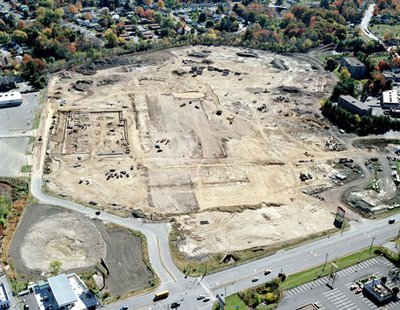
It's seems to be the best I can do. I've searched everywhere for a picture of the old G. Fox store in Waterbury, CT. This is an image of the Naugatuck Valley Mall after demolition. I think the Fox store was on the left hand side of the image.

Saturday, November 11, 2006
The Planning Stage
I was busy stacking firewood with Laurae this afternoon and then we tackled the run-away tomato plant in the patio area. Gone! We picked some late falling walnuts and now it’s getting colder and cloudier every minute. Could be raining soon and a fire would be nice.
So what am I getting at? Well, I was reading my granddaughters blog the other day and she was bemoaning the fact that life wasn’t following her plan; or she didn’t have a plan that looked anything at all like her life. And so I was thinking about that as I picked through the walnuts and stacked the firewood. How did we get to this place in our lives? Why are we in Orland in the year 2006? Is this what we planned? Those were good questions and it started me thinking about my own life plans, back when I was ready to leave my parent’s house.
Some of those plans are already recounted earlier in this blog and so if you have read it, I don’t have to tell you that my plans were; shall we say, tenuous?
As a child I wanted to be a veterinarian, a cowboy, a fireman and a host of others. But none of those dreams made it past my freshman year of high school. That was when I realized that I had to be SERIOUS about my career. If I didn’t get it at first, my career counselor made it very clear at our second meeting. But getting it and doing it were two very different things. And I left high school without a plan.
Then there was a semester of Junior College…which I hated! It was boring and my classes were boring; life was boring. So I joined the Navy because I was bored. What kind of a plan is that?
After the Navy, I had some vague plans. Go back to school and make something of myself. I was admitted to Cal Poly and then proceeded to party; wasting a semester of life preparation. No plan there.
To make a long story short, our life has been short of well executed plans. They may have been well thought out and brilliantly detailed, but when things happened in our lives, we made corrections in our course and sailed on; oblivious to our destination or even a need for one. Not the wisest way to travel! But it seemed to fit us…
Luckily, we humans are blessed with much resilience and a natural optimism. We may fail at something and see our dreams evaporate, but we generally pick ourselves up and motor on, building a new dream as we go. Then we tell ourselves that this new dream is better anyway; much better than the last one.
I think I see a theme here; plans aren’t made…plans happen.
So what am I getting at? Well, I was reading my granddaughters blog the other day and she was bemoaning the fact that life wasn’t following her plan; or she didn’t have a plan that looked anything at all like her life. And so I was thinking about that as I picked through the walnuts and stacked the firewood. How did we get to this place in our lives? Why are we in Orland in the year 2006? Is this what we planned? Those were good questions and it started me thinking about my own life plans, back when I was ready to leave my parent’s house.
Some of those plans are already recounted earlier in this blog and so if you have read it, I don’t have to tell you that my plans were; shall we say, tenuous?
As a child I wanted to be a veterinarian, a cowboy, a fireman and a host of others. But none of those dreams made it past my freshman year of high school. That was when I realized that I had to be SERIOUS about my career. If I didn’t get it at first, my career counselor made it very clear at our second meeting. But getting it and doing it were two very different things. And I left high school without a plan.
Then there was a semester of Junior College…which I hated! It was boring and my classes were boring; life was boring. So I joined the Navy because I was bored. What kind of a plan is that?
After the Navy, I had some vague plans. Go back to school and make something of myself. I was admitted to Cal Poly and then proceeded to party; wasting a semester of life preparation. No plan there.
To make a long story short, our life has been short of well executed plans. They may have been well thought out and brilliantly detailed, but when things happened in our lives, we made corrections in our course and sailed on; oblivious to our destination or even a need for one. Not the wisest way to travel! But it seemed to fit us…
Luckily, we humans are blessed with much resilience and a natural optimism. We may fail at something and see our dreams evaporate, but we generally pick ourselves up and motor on, building a new dream as we go. Then we tell ourselves that this new dream is better anyway; much better than the last one.
I think I see a theme here; plans aren’t made…plans happen.
Thursday, November 02, 2006
Postcard
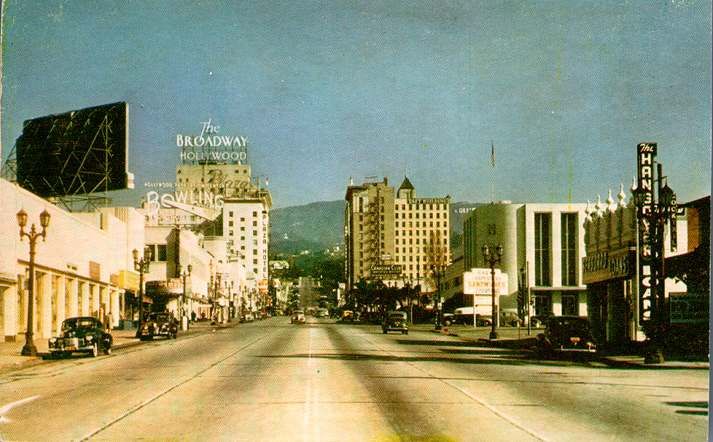
Here's an old postcard view of that corner. The Broadway store is on the right and in the room behind the window on the 3rd floor is the column I was describing...

And here's a long view of the same corner...looking west. Notice the absence of traffic!


And here's a long view of the same corner...looking west. Notice the absence of traffic!
Picture this
As I continue this story called “Working”, I want to be able to post some photos as I go along. I don’t have a lot of those from the early years and the ones I do have are mostly Polaroid’s; remember those? And since posting photos means that I will have to browse through the boxes of photos we have and then scan them, this project may take awhile. Have you ever been successful at quickly browsing through old photographs? The hours fly by and I’m still looking at the first box!
Back to the story…I’ll look at the photos later.
One of the remodel projects that I was involved in was on the 3rd floor of the Broadway store on the corner of Hollywood and Vine; that most famous of intersections. It was pretty much a normal job for us, except for the location. Everyday, as we went down the street to buy lunch, we found the corner crowded with tourists, all taking pictures of the street sign. In fact, all four corners had a crowd. And a lot of them would step out into traffic to get that perfect shot!
The story I remember most about this store remodel was an incident that didn’t happen to me at all; it happened to a plumber.
One day, I was using a High Velocity powder actuated tool to fasten some steel to a concrete column and before I pulled the trigger, the plumber stopped me…and told me why he had been off the job recently. He had been doing the same thing I was about to do, except when he pulled the trigger, the pin drove into the concrete and then hit a buried piece of roof drain piping. The shape of the pipe made the pin turn and come back out, point first. This is called “Fish hooking” and there was an armored plate at the end of the gun to catch those rare instances. But in this case, it missed the plate and entered his stomach, cutting him up very badly. He had spent the last few weeks in the hospital and had just come back to work. Then he showed me his scar…very sobering!
Yes, I pulled the trigger…but it was with some reluctance. I had always depended on that armor plate and thought it was fool proof.
Back to the story…I’ll look at the photos later.
One of the remodel projects that I was involved in was on the 3rd floor of the Broadway store on the corner of Hollywood and Vine; that most famous of intersections. It was pretty much a normal job for us, except for the location. Everyday, as we went down the street to buy lunch, we found the corner crowded with tourists, all taking pictures of the street sign. In fact, all four corners had a crowd. And a lot of them would step out into traffic to get that perfect shot!
The story I remember most about this store remodel was an incident that didn’t happen to me at all; it happened to a plumber.
One day, I was using a High Velocity powder actuated tool to fasten some steel to a concrete column and before I pulled the trigger, the plumber stopped me…and told me why he had been off the job recently. He had been doing the same thing I was about to do, except when he pulled the trigger, the pin drove into the concrete and then hit a buried piece of roof drain piping. The shape of the pipe made the pin turn and come back out, point first. This is called “Fish hooking” and there was an armored plate at the end of the gun to catch those rare instances. But in this case, it missed the plate and entered his stomach, cutting him up very badly. He had spent the last few weeks in the hospital and had just come back to work. Then he showed me his scar…very sobering!
Yes, I pulled the trigger…but it was with some reluctance. I had always depended on that armor plate and thought it was fool proof.
Tuesday, October 31, 2006
Saks
Sorry for the interruption in the narrative. I was waiting for some inspiration and it just never materialized, so I had to go and find it.
Let’s see…I left the reader in Connecticut when I last posted.
Spring eventually came to New England, but not before we had a chance to experience the 5th season; mud. It comes between winter and spring and has nothing to recommend it.
And with spring came the end of the job. The G. Fox store of Waterbury Connecticut opened on time and with great celebration while we shipped our tools home and took the final flight west.
Sad…but the store was demolished a few years ago. Alex sent me a newspaper clipping of the event. Of course the clipping made mention of the asbestos contamination in the building; a hazard we weren’t aware of when we were building it.
Once we were back in Southern California we got back into the usual routine of taking on projects of all sizes. Some would take less than a week and those were always my favorite kind. I was able to travel all over the greater Los Angeles area and never knew where the next project would land me. We worked as far south as San Diego and as far east as Palm Springs. And since we seemed to have found a niche in department store remodeling, we would sometimes have to take on jobs late at night, remodeling complete departments overnight so that they could open the next day without any loss of revenue.
Saks 5th Avenue store in Beverly Hills was one that we spent a few nights in. We would arrive about 9, just as the last shoppers were leaving and then we were locked in by the security guards. The guards would return at 5:30 in the morning to let us out. In that short time we would have completed the demolition of an existing department and rebuilt it with a brand new look…except for the paint. That happened the next night.
Of course we had to spend some time looking at all of the merchandise and wondering why anyone would spend that kind of money on some of the items. $5,000 for a dress? That was an amount that could serve as a year’s salary!
Let’s see…I left the reader in Connecticut when I last posted.
Spring eventually came to New England, but not before we had a chance to experience the 5th season; mud. It comes between winter and spring and has nothing to recommend it.
And with spring came the end of the job. The G. Fox store of Waterbury Connecticut opened on time and with great celebration while we shipped our tools home and took the final flight west.
Sad…but the store was demolished a few years ago. Alex sent me a newspaper clipping of the event. Of course the clipping made mention of the asbestos contamination in the building; a hazard we weren’t aware of when we were building it.
Once we were back in Southern California we got back into the usual routine of taking on projects of all sizes. Some would take less than a week and those were always my favorite kind. I was able to travel all over the greater Los Angeles area and never knew where the next project would land me. We worked as far south as San Diego and as far east as Palm Springs. And since we seemed to have found a niche in department store remodeling, we would sometimes have to take on jobs late at night, remodeling complete departments overnight so that they could open the next day without any loss of revenue.
Saks 5th Avenue store in Beverly Hills was one that we spent a few nights in. We would arrive about 9, just as the last shoppers were leaving and then we were locked in by the security guards. The guards would return at 5:30 in the morning to let us out. In that short time we would have completed the demolition of an existing department and rebuilt it with a brand new look…except for the paint. That happened the next night.
Of course we had to spend some time looking at all of the merchandise and wondering why anyone would spend that kind of money on some of the items. $5,000 for a dress? That was an amount that could serve as a year’s salary!
Tuesday, August 29, 2006
After the storm
After that brief detour, my story returns to Connecticut.
The blizzard took place in the middle of winter and there was still plenty of cold weather for us to endure. And we saw what a New England winter would do to production figures. Our crew came to work each day in heavy insulated overalls with heavy jackets or sweatshirts on top of that. Most wore hardhats with insulated liners in them. This was fine gear to wear if you were going to be standing around in the cold, but it was our intention to get these people moving!
That was easier said than done. The work ethic was simply not part of the culture here and so it was like pulling teeth to get them to shed a jacket and work a little harder to stay warm. Alex and I dressed completely different from our crew, wearing jeans and thermal tops and nothing more than that. And our small crew of French Canadians dressed similarly. Even our shoes (insulated boots) were different. The crew wore heavy sno-packs and shuffled about in them. Speed was not an option with those kind of boots.
It wasn’t really that cold inside the building as we had insisted that the temperature had to be at least 40 degrees if they wanted us to start taping. So there were heaters (salamanders) everywhere and the roar from them was deafening. Plus, the kerosene fumes grew heavy in the air as the temperature climbed towards 45 or 50 degrees. It was actually quite pleasant to take a break outside, where the temperature might be 10 or 15 degrees…but the air was crisp clean and it was blissfully quiet.
With our Canucks leading the way, we finally had some drywall ready to tape and that was when Eddie joined us from California. He had volunteered for the job and he was good friend as well, so we welcomed him to our small “home” by the lake. Within a few days a box of taping tools arrived from California and we unpacked them on the job. What a surprise that was! As we took the tools out of the box, we noticed that we had a large crowd of observers watching us. One carpenter asked, “What in the heck are those things?” That was when we knew we were in trouble. Apparently, the tapers in this area never used these kinds of tools. We found out that they used hand tools exclusively and there was a Painter’s Union ban on the use of taping tools like “boxes” and “bazookas”. Oops!
The blizzard took place in the middle of winter and there was still plenty of cold weather for us to endure. And we saw what a New England winter would do to production figures. Our crew came to work each day in heavy insulated overalls with heavy jackets or sweatshirts on top of that. Most wore hardhats with insulated liners in them. This was fine gear to wear if you were going to be standing around in the cold, but it was our intention to get these people moving!
That was easier said than done. The work ethic was simply not part of the culture here and so it was like pulling teeth to get them to shed a jacket and work a little harder to stay warm. Alex and I dressed completely different from our crew, wearing jeans and thermal tops and nothing more than that. And our small crew of French Canadians dressed similarly. Even our shoes (insulated boots) were different. The crew wore heavy sno-packs and shuffled about in them. Speed was not an option with those kind of boots.
It wasn’t really that cold inside the building as we had insisted that the temperature had to be at least 40 degrees if they wanted us to start taping. So there were heaters (salamanders) everywhere and the roar from them was deafening. Plus, the kerosene fumes grew heavy in the air as the temperature climbed towards 45 or 50 degrees. It was actually quite pleasant to take a break outside, where the temperature might be 10 or 15 degrees…but the air was crisp clean and it was blissfully quiet.
With our Canucks leading the way, we finally had some drywall ready to tape and that was when Eddie joined us from California. He had volunteered for the job and he was good friend as well, so we welcomed him to our small “home” by the lake. Within a few days a box of taping tools arrived from California and we unpacked them on the job. What a surprise that was! As we took the tools out of the box, we noticed that we had a large crowd of observers watching us. One carpenter asked, “What in the heck are those things?” That was when we knew we were in trouble. Apparently, the tapers in this area never used these kinds of tools. We found out that they used hand tools exclusively and there was a Painter’s Union ban on the use of taping tools like “boxes” and “bazookas”. Oops!
Thursday, August 24, 2006
Playing in the mud
I was driving into Chico the other morning, early, when I glanced over at the new bridge under construction on Highway 32. They were getting ready to pour concrete on the deck and I was suddenly reminded of the many times that I was on a similar deck, though much higher in the air, and working fast to stay ahead of the “mud”.
No, I never worked on a bridge, but I knew exactly what each person in that crew was doing. On a highway bridge or on a deck 30 stories in the air, the process is the same. I guess I will always be sentimental about that part of my career in construction. When I was working with my tools on, I was excited about each day at work. There was a very real danger in what we did and just sensing that made every day special. (I guess you had to be there…)
Memory: We were late in getting our hanger wires in place for the 3rd floor ceilings on the Broadway store project in San Bernardino. The pour was scheduled for 7 in the morning and so that meant we had to be up on the deck and working by 4 AM. We had to layout the location for the wire drop by measuring from the tops of each column, barely visible through the rebar maze that covered the deck. After the layout was complete and double checked, we had to punch holes in the steel deck in a 3’ x 4’ pattern. We would then thread 12’ lengths of #8 wire down through the holes and tie off the ends on a piece of rebar. We only had moonlight to work under and it was eerie, walking on top of the rebar, looking for the holes to drop a wire into. Somewhere across the deck, in the dark, you could hear the “bang!” as the deck punch was driven down into the steel. Don’t trip! Especially near the edge…
By 6:30 we could hear the concrete pump being setup below and then the concrete crew was up on the deck with us as they laid their “slick line” across the rebar. And sure enough, at 7 AM sharp, the pump would roar into life and concrete would come pulsing up the line and out onto the deck. Now we had to hurry to stay ahead of the pour, sometimes just a few feet away from us.
By 7:30 we were through and headed down the ladder, eager for a break. Above us, we could hear the scrape and rattle as they lifted the mesh and vibrated the “mud” into place. I loved it!
No, I never worked on a bridge, but I knew exactly what each person in that crew was doing. On a highway bridge or on a deck 30 stories in the air, the process is the same. I guess I will always be sentimental about that part of my career in construction. When I was working with my tools on, I was excited about each day at work. There was a very real danger in what we did and just sensing that made every day special. (I guess you had to be there…)
Memory: We were late in getting our hanger wires in place for the 3rd floor ceilings on the Broadway store project in San Bernardino. The pour was scheduled for 7 in the morning and so that meant we had to be up on the deck and working by 4 AM. We had to layout the location for the wire drop by measuring from the tops of each column, barely visible through the rebar maze that covered the deck. After the layout was complete and double checked, we had to punch holes in the steel deck in a 3’ x 4’ pattern. We would then thread 12’ lengths of #8 wire down through the holes and tie off the ends on a piece of rebar. We only had moonlight to work under and it was eerie, walking on top of the rebar, looking for the holes to drop a wire into. Somewhere across the deck, in the dark, you could hear the “bang!” as the deck punch was driven down into the steel. Don’t trip! Especially near the edge…
By 6:30 we could hear the concrete pump being setup below and then the concrete crew was up on the deck with us as they laid their “slick line” across the rebar. And sure enough, at 7 AM sharp, the pump would roar into life and concrete would come pulsing up the line and out onto the deck. Now we had to hurry to stay ahead of the pour, sometimes just a few feet away from us.
By 7:30 we were through and headed down the ladder, eager for a break. Above us, we could hear the scrape and rattle as they lifted the mesh and vibrated the “mud” into place. I loved it!
Monday, August 21, 2006
Blizzard
The weeks passed and we settled into a routine where Alex would fly home one weekend and then I would fly home the next. Twice a month. The flights were fun and we had 4 days at home. Warm and sunny Southern California. Then it was back to the reality of ice and snow in New England.
One weekend, while Alex was away, a Nor’easter blew in; a real blizzard! It started Friday night and snowed all day Saturday and Sunday. I sat in our little hotel room and watched in amazement as the snow fell; higher and higher. I had plenty of food in our kitchenette and the power stayed on. Alas, the phone went out. Not a bad thing really, as the phone was outside and attached to a pole supporting the overhang. And to use the phone, you had to walk to the manager’s house and ask them to connect the phone to an outside line. Then walk back…through the snow.
Monday morning came and I was up early to dig out my car and get on the road. So I dug and I dug, piling up great mounds of snow on each side of the car. It was shortly after I finished that I realized that I hadn’t heard any snowplows coming down our road. In fact it was silent, very silent…except for my hard breathing! Well, I had a car that I could now sit in but without a road to drive it on. I raced back into the room and began calling our workers houses, to let them know that I would be late. The first one I talked to had to laugh, uproariously. Did I really believe that people were going to work today? Well, I did believe that, but I was wrong.
Now I had a day off and nowhere to go. So I decided to walk to the corner store and use the payphone to let Alex know about my predicament. I started off and immediately ran into a problem. The snow had drifted higher as I got closer to the road and pretty soon I was looking at ten to twelve foot high drifts of powder snow. I struggled on, finding my way slowly. It was a beautiful sunny day and the blue sky and white snow made the struggle less painful. After about an hour, I had made it to the corner gas station, probably a quarter mile distant from our room. I spotted the top of the telephone booth and climbed a steep hill of snow to get to it. Luckily the door was still open and the booth was sitting a well of snow, so I slid down into it.
The phone even worked and I was soon telling Alex of my adventures. And describing my current location; a phone booth in an ocean of snow.
One weekend, while Alex was away, a Nor’easter blew in; a real blizzard! It started Friday night and snowed all day Saturday and Sunday. I sat in our little hotel room and watched in amazement as the snow fell; higher and higher. I had plenty of food in our kitchenette and the power stayed on. Alas, the phone went out. Not a bad thing really, as the phone was outside and attached to a pole supporting the overhang. And to use the phone, you had to walk to the manager’s house and ask them to connect the phone to an outside line. Then walk back…through the snow.
Monday morning came and I was up early to dig out my car and get on the road. So I dug and I dug, piling up great mounds of snow on each side of the car. It was shortly after I finished that I realized that I hadn’t heard any snowplows coming down our road. In fact it was silent, very silent…except for my hard breathing! Well, I had a car that I could now sit in but without a road to drive it on. I raced back into the room and began calling our workers houses, to let them know that I would be late. The first one I talked to had to laugh, uproariously. Did I really believe that people were going to work today? Well, I did believe that, but I was wrong.
Now I had a day off and nowhere to go. So I decided to walk to the corner store and use the payphone to let Alex know about my predicament. I started off and immediately ran into a problem. The snow had drifted higher as I got closer to the road and pretty soon I was looking at ten to twelve foot high drifts of powder snow. I struggled on, finding my way slowly. It was a beautiful sunny day and the blue sky and white snow made the struggle less painful. After about an hour, I had made it to the corner gas station, probably a quarter mile distant from our room. I spotted the top of the telephone booth and climbed a steep hill of snow to get to it. Luckily the door was still open and the booth was sitting a well of snow, so I slid down into it.
The phone even worked and I was soon telling Alex of my adventures. And describing my current location; a phone booth in an ocean of snow.
Wednesday, August 16, 2006
Life at the lake
We soon settled into a routine of sorts on the job. We would hold classes for an hour or two every morning, teaching the local carpenters all about steel studs. Then came a long day as we struggled not to criticize their failings as they tried to put to use their new skills? These were "wood butchers" through and through and it was like teaching them a foreign language. A language they were not interested in learning.
When 4:30 rolled around, we were always ready to drive out of town and into rural Connecticut, where we could unwind. After taking showers in our little apartment, we would head over to Duval's restaurant in Bantam. "Pop" Duval was the bartender as well as proprietor of this small bar and restaurant. A couple of Scotches or maybe a Schaeffer's brew would get us into the mood for dinner. Salad and spaghetti with a side order of a dozen steamers was always a favorite. $1 a dozen for fresh steamed clams. The whole dinner, $2.50. A Maine lobster dinner ran $5. (And there is no comparison in size between a Maine lobster and a Pacific Crayfish.) After dinner, we would rejoin Pop in the bar for a glass of sherry and Pop would entertain us with short and pithy stories of the local area. He didn't know he was entertaining us; he always talked this way.
About 10, we would head back to our room, the studded snow tires rumbling on the icy roads. A dark sky and a million stars to see in that frozen time...
It would start all over again the next morning. Sort of like "Groundhog Day". Except that movie hadn't been made yet.
We were getting desperate for good labor, our schedule was off by weeks now and not days and then we heard that some French Canadians were in town and they knew drywall. We searched them out and after a few minutes of interviews, where they said a few key words, words that indicated that they really did know the trade, we hired them. All of them. I think it was about 8 altogether and all related. Jacque and Nazaire were cousins and spoke English. That's all we needed.
It turned out well, they weren't the best in the world, but they wanted to work and that put them far ahead of the locals. And the locals hated them for it. All trades in the Northeast seemed to be divided up by ethnic origins and there was no place for these foreigners, these Canucks.
At break time or lunch, the Italians and the Irish would find their respective places on a stack of sheetrock, making sure there was no room for us or the Canadians.
So we would find another stack and then have to sit and try to figure out what was being said to us or about us by half a dozen of our new French speaking friends. Nazaire would usually remember to translate for us if there had been a particularly funny joke told.
Slowly, we made progress.
When 4:30 rolled around, we were always ready to drive out of town and into rural Connecticut, where we could unwind. After taking showers in our little apartment, we would head over to Duval's restaurant in Bantam. "Pop" Duval was the bartender as well as proprietor of this small bar and restaurant. A couple of Scotches or maybe a Schaeffer's brew would get us into the mood for dinner. Salad and spaghetti with a side order of a dozen steamers was always a favorite. $1 a dozen for fresh steamed clams. The whole dinner, $2.50. A Maine lobster dinner ran $5. (And there is no comparison in size between a Maine lobster and a Pacific Crayfish.) After dinner, we would rejoin Pop in the bar for a glass of sherry and Pop would entertain us with short and pithy stories of the local area. He didn't know he was entertaining us; he always talked this way.
About 10, we would head back to our room, the studded snow tires rumbling on the icy roads. A dark sky and a million stars to see in that frozen time...
It would start all over again the next morning. Sort of like "Groundhog Day". Except that movie hadn't been made yet.
We were getting desperate for good labor, our schedule was off by weeks now and not days and then we heard that some French Canadians were in town and they knew drywall. We searched them out and after a few minutes of interviews, where they said a few key words, words that indicated that they really did know the trade, we hired them. All of them. I think it was about 8 altogether and all related. Jacque and Nazaire were cousins and spoke English. That's all we needed.
It turned out well, they weren't the best in the world, but they wanted to work and that put them far ahead of the locals. And the locals hated them for it. All trades in the Northeast seemed to be divided up by ethnic origins and there was no place for these foreigners, these Canucks.
At break time or lunch, the Italians and the Irish would find their respective places on a stack of sheetrock, making sure there was no room for us or the Canadians.
So we would find another stack and then have to sit and try to figure out what was being said to us or about us by half a dozen of our new French speaking friends. Nazaire would usually remember to translate for us if there had been a particularly funny joke told.
Slowly, we made progress.
Friday, August 04, 2006
Moving
The G. Fox store was larger than the normal size for department stores at that time; 3 stories tall and perhaps 90,000 square feet per floor. This was the kind of project that would normally take us about 4 months to complete. But this wasn’t going to be normal…
First, we had weather to contend with. It was winter time in New England and we had ice and snow to contend with; something that Southern Californians knew very little about. But we learned.
After the first week had passed, we had a crew of sorts and we were holding daily lessons for our carpenters on how to frame with steel studs. And judging from the results, we were not looking forward to the drywall application “lessons”. Despite our repeated requests to the local business agent, no drywall talent was to be found.
Also, at the end of that first week, we decided to move to a more comfortable location. Our little motel room was starting to feel like a jail cell for the two of us. So we went for a drive, to see what accommodations might be available.
And about 30 minutes out of Waterbury, we found the town of Morris and Bantam Lake. We liked the looks of this small town and we found a motel/inn that had monthly rentals of 2 bedroom apartments. We could have a kitchen and a living room! Almost like normal life… we moved that day.
On the following Monday, we mentioned our new address during a coffee break with the crew. Hilarity ensued. They thought we were crazy to be driving all of that way to work! (30 minutes) Being Californians, we didn’t get it? We might drive for 30 minutes just to go to the store. What was so funny? As it turned out, this move only confirmed what the locals already believed about the “crazy Californians”.
First, we had weather to contend with. It was winter time in New England and we had ice and snow to contend with; something that Southern Californians knew very little about. But we learned.
After the first week had passed, we had a crew of sorts and we were holding daily lessons for our carpenters on how to frame with steel studs. And judging from the results, we were not looking forward to the drywall application “lessons”. Despite our repeated requests to the local business agent, no drywall talent was to be found.
Also, at the end of that first week, we decided to move to a more comfortable location. Our little motel room was starting to feel like a jail cell for the two of us. So we went for a drive, to see what accommodations might be available.
And about 30 minutes out of Waterbury, we found the town of Morris and Bantam Lake. We liked the looks of this small town and we found a motel/inn that had monthly rentals of 2 bedroom apartments. We could have a kitchen and a living room! Almost like normal life… we moved that day.
On the following Monday, we mentioned our new address during a coffee break with the crew. Hilarity ensued. They thought we were crazy to be driving all of that way to work! (30 minutes) Being Californians, we didn’t get it? We might drive for 30 minutes just to go to the store. What was so funny? As it turned out, this move only confirmed what the locals already believed about the “crazy Californians”.
Thursday, August 03, 2006
G. Fox
The Pacific Telephone project was certainly not the norm. If there is any such thing as a “normal” construction project? And with that said, my memory serves up the story of the G. Fox Department Store in Waterbury, Connecticut.
Our boss, Marshall, had received a request to bid on the construction of a new department store for the May Co. The store was to be the flagship store of a New England department store chain they had recently purchased.
After figuring in all sorts of additional costs; air transportation, moving and housing, vehicle rentals, etc, etc; the bid was prepared and surprise! We had a job in Connecticut. I was asked if I wanted to go and I quickly agreed.
Before making the trip, we had to prepare boxes of equipment to ship. Power cords, screw guns and welders. All of these things were packed into wooden boxes and sent off.
(It should be noted that we wouldn’t think of doing that today. We would have bought all of our equipment locally.)
Soon it was time for us to pack our suitcases and take a long non-stop flight to Hartford. And once a month we would take that same flight as we returned home for a long weekend.
I remember that we flew on American Airlines, a luxurious 727. The plane rarely had more than 50 passengers and I remember a time when there were less than 20 people on a plane that held over 100.
After arriving in Waterbury, we found a motel to stay in and then went to check in with the local Carpenters Union. This was an eye-opener. We had never seen a Union like this one! The local office was run by a Business Agent named “Eddie”. And he ran it like it was his own personal kingdom. I suppose it was.
We knew we were in some trouble when we asked him if he had some men available that were skilled in drywall and metal framing. He looked at us and didn’t say a word for a minute. Then he slowly stated, “My men can do anything.” Oh?
We asked for three men to start with, and with the knowledge that the first man hired would become the “Steward” and would be the last man fired. And when they arrived at the jobsite the next morning, our Steward turned out to be a 65 year old Millwright. The other two carpenters were just that…carpenters. None of the three had ever seen a metal stud or installed drywall. It was going to be a long job!
Our boss, Marshall, had received a request to bid on the construction of a new department store for the May Co. The store was to be the flagship store of a New England department store chain they had recently purchased.
After figuring in all sorts of additional costs; air transportation, moving and housing, vehicle rentals, etc, etc; the bid was prepared and surprise! We had a job in Connecticut. I was asked if I wanted to go and I quickly agreed.
Before making the trip, we had to prepare boxes of equipment to ship. Power cords, screw guns and welders. All of these things were packed into wooden boxes and sent off.
(It should be noted that we wouldn’t think of doing that today. We would have bought all of our equipment locally.)
Soon it was time for us to pack our suitcases and take a long non-stop flight to Hartford. And once a month we would take that same flight as we returned home for a long weekend.
I remember that we flew on American Airlines, a luxurious 727. The plane rarely had more than 50 passengers and I remember a time when there were less than 20 people on a plane that held over 100.
After arriving in Waterbury, we found a motel to stay in and then went to check in with the local Carpenters Union. This was an eye-opener. We had never seen a Union like this one! The local office was run by a Business Agent named “Eddie”. And he ran it like it was his own personal kingdom. I suppose it was.
We knew we were in some trouble when we asked him if he had some men available that were skilled in drywall and metal framing. He looked at us and didn’t say a word for a minute. Then he slowly stated, “My men can do anything.” Oh?
We asked for three men to start with, and with the knowledge that the first man hired would become the “Steward” and would be the last man fired. And when they arrived at the jobsite the next morning, our Steward turned out to be a 65 year old Millwright. The other two carpenters were just that…carpenters. None of the three had ever seen a metal stud or installed drywall. It was going to be a long job!
Sunday, July 30, 2006
Reasons
The project continued like clockwork. Floor after floor was completed without a hitch. That was the strange part. Most construction projects were (and are) contentious. Change orders are requested and then denied. The project slows down at each of these change order stumbling blocks and then it has to accelerate to get back on schedule. But not this project. Every change order request was approved immediately and the project never faltered.
After a couple of months, I learned why this project was so different. I overheard a couple of conversations and put two and two together. All of the costs for this project would be submitted to the Public Utilities Commission in a request for a rate increase. That rate increase would more than pay for any costs incurred in building the new switching station. The costs were going to become evidence that Pacific Telephone was diligent in their efforts to be a responsible utility and to constantly look for ways to better serve their customers. So, the more this project cost…the better! And everyone was in on the game. Except for the PUC, of course. (Who knows? Maybe they were as well.)
After a couple of months, I learned why this project was so different. I overheard a couple of conversations and put two and two together. All of the costs for this project would be submitted to the Public Utilities Commission in a request for a rate increase. That rate increase would more than pay for any costs incurred in building the new switching station. The costs were going to become evidence that Pacific Telephone was diligent in their efforts to be a responsible utility and to constantly look for ways to better serve their customers. So, the more this project cost…the better! And everyone was in on the game. Except for the PUC, of course. (Who knows? Maybe they were as well.)
Friday, July 28, 2006
Moving
It wasn’t long before we were ready to move up to the second floor and so I called the scaffold company and told them to build another set of rolling scaffolds on that floor, just like the ones on the first floor. We were leaving the ones on the first floor until the tapers finished their work.
But, before we moved, I had to come up with an idea as to how I would finish the inside of the Vertical Cable Room. “Room” was probably not the best word to use, as it was actually a shaft that ran for 300 feet horizontally against the outside wall and was only 3 feet wide, though 28 feet tall on each floor. Framing this shaft was easy, as it could be done from outside the shaft space. But getting a crew up to the 20 foot height while inside the shaft was going to be difficult. We came up with the idea of rolling a scaffold alongside the wall and then using outriggers and a plank that extended through the studs and into the shaft. Being very careful, we started installing the drywall at the top and worked our way down, 4 feet at a time. It was slow but it worked perfectly.
We began our work on the second floor and I quickly discovered a new problem, “burnout”. The second floor looked exactly like the first floor; those crew members that had worked so hard to fireproof those first beams were now faced with doing the same repetitive, boring work again. Nothing had changed. Where was the challenge?
I should add that the construction industry attracts personality types that love change! A steady job holds little appeal. Oh, they like a steady paycheck; they just want to work at lot of different of places to earn it. I’ve had people quit because they felt like they had been on a job far too long; 3 months. I certainly understood it. I’m one of those “types” as well.
To stop production loss, I had to start rotating the crew; those working on the scaffolds would come down and work on the walls for a week and vice versa. And I had to ask our superintendent to start rotating crews from other projects as well. That worked and production rose again.
But, before we moved, I had to come up with an idea as to how I would finish the inside of the Vertical Cable Room. “Room” was probably not the best word to use, as it was actually a shaft that ran for 300 feet horizontally against the outside wall and was only 3 feet wide, though 28 feet tall on each floor. Framing this shaft was easy, as it could be done from outside the shaft space. But getting a crew up to the 20 foot height while inside the shaft was going to be difficult. We came up with the idea of rolling a scaffold alongside the wall and then using outriggers and a plank that extended through the studs and into the shaft. Being very careful, we started installing the drywall at the top and worked our way down, 4 feet at a time. It was slow but it worked perfectly.
We began our work on the second floor and I quickly discovered a new problem, “burnout”. The second floor looked exactly like the first floor; those crew members that had worked so hard to fireproof those first beams were now faced with doing the same repetitive, boring work again. Nothing had changed. Where was the challenge?
I should add that the construction industry attracts personality types that love change! A steady job holds little appeal. Oh, they like a steady paycheck; they just want to work at lot of different of places to earn it. I’ve had people quit because they felt like they had been on a job far too long; 3 months. I certainly understood it. I’m one of those “types” as well.
To stop production loss, I had to start rotating the crew; those working on the scaffolds would come down and work on the walls for a week and vice versa. And I had to ask our superintendent to start rotating crews from other projects as well. That worked and production rose again.
Wednesday, July 26, 2006
Getting Up in the World
After about 3 months, the first of the steel frame made its appearance above ground and we were able to start in a small way. But before we started, I was told that the contract we had signed was for “Time and Material”. The general contractor would pay for all costs, plus our profit. And that special arrangement had been made with a scaffold contractor to supply us with any scaffold we desired, all for one price.
At the time we started, the general contractor had a workforce of over 200 men, 134 carpenters and the rest were laborers; the most carpenters I had ever seen on one job. And although we started with a small crew, maybe half a dozen men; the GC told me that he was going to “give me” two laborers and that I could have them do anything I needed. Not to worry…they would remain on his payroll. He indicated that having a clean worksite was more important than a few dollars for labor and he was glad to spend it! To top off his generosity, he gave me the keys to a forklift and said it was mine to use. He had rented it for the duration of the job anyway and it was just sitting there. Better that I should use it than for it to get rusty.
We started our work in the lower levels, building fireproof cable runs, while the iron workers kept adding to the height of the building. My two laborers were there every day, brooms in hand, just waiting for one of us to drop a piece of scrap metal or drywall. And they were diligent. At the end of the day there was no evidence of our having been there except for the completed work.
After a couple of weeks, the second floor was decked over and the concrete was poured. A special Robertson decking was being used that allowed for cable runs beneath the floors and these required a great deal of fireproofing. Our plan was to use rolling scaffolds, linked together in groups of four and in enough quantity to do half of the floor space at one time. And since the working height was over 20’, these scaffolds were huge. It would take about 8 men, including the two laborers, to move them about the floor.
Now I had a use for “my” forklift! I would take full units of framing material and lift them to the top of the scaffold. And do the same with the drywall when we were ready to install it.
My crew increased till I had about 36 men working on top of the scaffolds. My job was to drive the forklift and supply them with material. That way I could monitor progress quite easily. And since I was right there, I could answer any questions that the crew had concerning what kind of fireproofing was needed for their portion of the work that day. Of course I couldn’t help but organize some competition and pretty soon the scaffold teams had names and were doing their best to outdo one another.
At the time we started, the general contractor had a workforce of over 200 men, 134 carpenters and the rest were laborers; the most carpenters I had ever seen on one job. And although we started with a small crew, maybe half a dozen men; the GC told me that he was going to “give me” two laborers and that I could have them do anything I needed. Not to worry…they would remain on his payroll. He indicated that having a clean worksite was more important than a few dollars for labor and he was glad to spend it! To top off his generosity, he gave me the keys to a forklift and said it was mine to use. He had rented it for the duration of the job anyway and it was just sitting there. Better that I should use it than for it to get rusty.
We started our work in the lower levels, building fireproof cable runs, while the iron workers kept adding to the height of the building. My two laborers were there every day, brooms in hand, just waiting for one of us to drop a piece of scrap metal or drywall. And they were diligent. At the end of the day there was no evidence of our having been there except for the completed work.
After a couple of weeks, the second floor was decked over and the concrete was poured. A special Robertson decking was being used that allowed for cable runs beneath the floors and these required a great deal of fireproofing. Our plan was to use rolling scaffolds, linked together in groups of four and in enough quantity to do half of the floor space at one time. And since the working height was over 20’, these scaffolds were huge. It would take about 8 men, including the two laborers, to move them about the floor.
Now I had a use for “my” forklift! I would take full units of framing material and lift them to the top of the scaffold. And do the same with the drywall when we were ready to install it.
My crew increased till I had about 36 men working on top of the scaffolds. My job was to drive the forklift and supply them with material. That way I could monitor progress quite easily. And since I was right there, I could answer any questions that the crew had concerning what kind of fireproofing was needed for their portion of the work that day. Of course I couldn’t help but organize some competition and pretty soon the scaffold teams had names and were doing their best to outdo one another.
Tuesday, July 25, 2006
Flash!
Probably not in calendar order…but after receiving my utility bill, I remembered this project.
It was in the mid 1970’s and I had just taken a foreman’s job with R&B Plastering. I knew their superintendent from a previous job and he had called me one night, offering me a $1 over foreman’s scale and a large bonus if I would take on a project that they had just secured. Sure! I liked the money and I was told that the project would last close to a year.
I was told to meet with the owner of R&B at the jobsite and that he would tell me more about it. Bob LaVerne was his name and “flash” was his style. He drove a bright red Cadillac El Dorado convertible, dressed in flashy leisure suits and had long and wavy silver hair. Even his teeth were flashy…all perfectly white and dazzling! (He was also the Commodore of the Long Beach Yacht Club…another story.)
We introduced each other and then took a look at the project. It was a switching station for Pacific Telephone, in Long Beach. It was going to be a concrete and steel building with 3 floors underground and 4 above ground. When we met, we were standing on the edge of a large excavation, probably 60 feet deep. Far below us there were hundreds of carpenters and huge piles of timber shoring, formply and 2x4’s. And this was when I first got a hint that it was going to be a “different” kind of job. An assistant superintendent for the general contractor interrupted our meeting with the project manager, to ask if he should order a forklift to be lowered into the hole so that the carpenters could more easily move all of the stacks of wood? No. The project manager told him to call the union hall and order more carpenters instead. Order 24 more. Whoa! That was different…and where were they all going to stand? The excavation looked like it was already filled with more people than it should have to be safe.
OK, it was obvious that the project wasn’t going to ready for drywall for quite awhile. The project would have to be above ground level before we could start and even then it would be slow going as our job was to provide fireproofing for all of the steel by wrapping it in 3 and 4 layers of drywall; a uniquely expensive method of fireproofing. I was told that the phone company had selected this method because it didn’t create as much dust as other fireproofing schemes.
Bob LaVerne also told me that the estimate called for over a million square feet of drywall…a number that staggered my imagination at the time. Especially when it was only on 4 floors of this building. Quick figuring; a journeyman could install about 900 square feet of drywall a day. That was over 1100 man-days just in drywall work, not including all of the framing, taping and general labor. Perhaps 4,000 man-days all together? (More later…)
It was in the mid 1970’s and I had just taken a foreman’s job with R&B Plastering. I knew their superintendent from a previous job and he had called me one night, offering me a $1 over foreman’s scale and a large bonus if I would take on a project that they had just secured. Sure! I liked the money and I was told that the project would last close to a year.
I was told to meet with the owner of R&B at the jobsite and that he would tell me more about it. Bob LaVerne was his name and “flash” was his style. He drove a bright red Cadillac El Dorado convertible, dressed in flashy leisure suits and had long and wavy silver hair. Even his teeth were flashy…all perfectly white and dazzling! (He was also the Commodore of the Long Beach Yacht Club…another story.)
We introduced each other and then took a look at the project. It was a switching station for Pacific Telephone, in Long Beach. It was going to be a concrete and steel building with 3 floors underground and 4 above ground. When we met, we were standing on the edge of a large excavation, probably 60 feet deep. Far below us there were hundreds of carpenters and huge piles of timber shoring, formply and 2x4’s. And this was when I first got a hint that it was going to be a “different” kind of job. An assistant superintendent for the general contractor interrupted our meeting with the project manager, to ask if he should order a forklift to be lowered into the hole so that the carpenters could more easily move all of the stacks of wood? No. The project manager told him to call the union hall and order more carpenters instead. Order 24 more. Whoa! That was different…and where were they all going to stand? The excavation looked like it was already filled with more people than it should have to be safe.
OK, it was obvious that the project wasn’t going to ready for drywall for quite awhile. The project would have to be above ground level before we could start and even then it would be slow going as our job was to provide fireproofing for all of the steel by wrapping it in 3 and 4 layers of drywall; a uniquely expensive method of fireproofing. I was told that the phone company had selected this method because it didn’t create as much dust as other fireproofing schemes.
Bob LaVerne also told me that the estimate called for over a million square feet of drywall…a number that staggered my imagination at the time. Especially when it was only on 4 floors of this building. Quick figuring; a journeyman could install about 900 square feet of drywall a day. That was over 1100 man-days just in drywall work, not including all of the framing, taping and general labor. Perhaps 4,000 man-days all together? (More later…)
Friday, July 21, 2006
Legal?
I suppose I could say something here about immigrants, legal and otherwise. They do have a place in the story of my life.
In the late 1960’s, we had a large project to do in Waterbury, Connecticut and we were having a terrible time finding competent help…then someone suggested that we explore the idea of hiring some French Canadians. We did and they were great workers! Yes, they were union members as well, but the other carpenters wouldn’t have anything to do with them. At lunchtime, we would sit on a stack of drywall with our Canuck crew, while the rest of the crew ate elsewhere…with their backs to us.
In the early to mid 1970’s, we saw a lot of immigrants coming into the drywall trade. Argentine immigrants with a few Uruguayans thrown in. And by 1973 I had a framing crew that was 80% Argentinean. Why? Because they worked the hardest and they were smart! I had no idea as to whether or not they were legal. It simply didn’t occur to me to care. They happened to be my friends and my fellow workers. Sure, I was the foreman, but that didn’t mean that I wasn’t their friend as well. I remember that most of them were 7th Day Adventists and the only problem I had with that was the fact that they couldn’t work overtime on Friday nights. They had interesting surnames, Müller, Buchhammer…Germanic names and quite common in Argentina. And most were college graduates, but without the US credentials to get them jobs in their normal professions. Francisco Müller, a good and dear friend, was a Mechanical engineer in Uruguay. In Los Angeles he was a drywaller.
In the late 1970’s, it changed again as the immigrants were now coming from Mexico and they were desperate for work. The contractors obliged by lowering the piece work rate until the union workers left. Then it was a race to the bottom as the contractors tried to see how cheaply they could hire the labor. In the tracts it was common to come to work in the morning and find “Claim sheets” nailed up in every house in the tract. Claim sheets used to be used to secure a house for yourself when you knew you were about to finish one house and needed to start another in the middle of the next day. You would find a house and nail up one sheet on the wall with your name on it. Now, every house had a claim sheet overnight.
Most of the pieceworkers just moved on to hourly work and without much regret. Piecework wasn’t the most desirable work and if someone else wanted to fight with the contractors over money…more power to them. Legal? Illegal? In the construction trades you were only known and respected by your skills. As it should be.
In the late 1960’s, we had a large project to do in Waterbury, Connecticut and we were having a terrible time finding competent help…then someone suggested that we explore the idea of hiring some French Canadians. We did and they were great workers! Yes, they were union members as well, but the other carpenters wouldn’t have anything to do with them. At lunchtime, we would sit on a stack of drywall with our Canuck crew, while the rest of the crew ate elsewhere…with their backs to us.
In the early to mid 1970’s, we saw a lot of immigrants coming into the drywall trade. Argentine immigrants with a few Uruguayans thrown in. And by 1973 I had a framing crew that was 80% Argentinean. Why? Because they worked the hardest and they were smart! I had no idea as to whether or not they were legal. It simply didn’t occur to me to care. They happened to be my friends and my fellow workers. Sure, I was the foreman, but that didn’t mean that I wasn’t their friend as well. I remember that most of them were 7th Day Adventists and the only problem I had with that was the fact that they couldn’t work overtime on Friday nights. They had interesting surnames, Müller, Buchhammer…Germanic names and quite common in Argentina. And most were college graduates, but without the US credentials to get them jobs in their normal professions. Francisco Müller, a good and dear friend, was a Mechanical engineer in Uruguay. In Los Angeles he was a drywaller.
In the late 1970’s, it changed again as the immigrants were now coming from Mexico and they were desperate for work. The contractors obliged by lowering the piece work rate until the union workers left. Then it was a race to the bottom as the contractors tried to see how cheaply they could hire the labor. In the tracts it was common to come to work in the morning and find “Claim sheets” nailed up in every house in the tract. Claim sheets used to be used to secure a house for yourself when you knew you were about to finish one house and needed to start another in the middle of the next day. You would find a house and nail up one sheet on the wall with your name on it. Now, every house had a claim sheet overnight.
Most of the pieceworkers just moved on to hourly work and without much regret. Piecework wasn’t the most desirable work and if someone else wanted to fight with the contractors over money…more power to them. Legal? Illegal? In the construction trades you were only known and respected by your skills. As it should be.
And then we're through...
One last story from the May Company remodel...One day as we were working in the Women's Shoe department, we had a chance to see a master thief at work. We were set up to work on a low scaffold at the back of the department. From our vantage point, about 6' off of the ground, we could see the entire department. Suddenly, Dick Celmer, my partner, nudges me and whispers..."Hey, look at the lady in the raincoat over there." We both watched as she talked to a salesclerk, while at the same time she was dropping boxes of shoes into her bag. She kept the clerks attention elsewhere while her hands were flying along the shelf. She and the clerk were almost shoulder to shoulder, but the clerk was only looking where the thief wanted her to. It was amazing to watch! Then she spotted us...and she quickly broke off her conversation and headed for the escalators. We jumped off of the scaffold and tried to follow but it was useless.
Sunday, July 16, 2006
Another Day Downtown
On another hard day of work at the May Co. remodel, we were asked to remove an existing wall and prepare the area in the Gift department for remodeling. That seemed simple enough and so we went down to the Hardware department and “borrowed” some hammers to use in our task; they were almost large enough to qualify as sledge hammers.
We then attacked the designated wall. Old plaster and dust flew. As the wall came down, we were expecting to see the outer wall of the building; that was what the plans told us to expect, but what we saw was another plaster wall and a door. Surprise!
After clearing away some of the debris, the May Co. representative was called and while we waited for his arrival, we decided to open the door and see what was there. The door had a frosted glass pane in it and it was obvious that some sort of light could be seen behind it. The door had been nailed closed before it had been covered over so it took some effort for us to open it.
Once opened, we saw the light source; this was an old exit stairway and there were windows to the outside in it. These stairs hadn’t been used in many years and somewhere in the stairway, a window must have been open or broken, because city pigeons had obviously been living in it…for a very long time! On the stairs there was a mountain of pigeon poop that followed the trail of the sprinkler line above. The pigeons had been roosting and nesting here in comfort for who knows how long.
Avoiding the obvious, we explored a little bit of the stairs and found the broken window on the floor above us. And we discovered that at each landing and above each door there were old-fashioned gas lamp fixtures. There was no trace of electrical power, so this stairway had to have been abandoned quite early in the history of the building.
After the May Co. representative arrived, he determined that a crew of cleaning people should tackle the mess and the pigeons were to be chased out permanently. Then we were to seal up the stairway once more.
Plans were then revised and eventually we built a new wall in the Gift department. Now I have to wonder if that hidden stairway still exists, or did some future remodeling expose it to scrutiny again?
We then attacked the designated wall. Old plaster and dust flew. As the wall came down, we were expecting to see the outer wall of the building; that was what the plans told us to expect, but what we saw was another plaster wall and a door. Surprise!
After clearing away some of the debris, the May Co. representative was called and while we waited for his arrival, we decided to open the door and see what was there. The door had a frosted glass pane in it and it was obvious that some sort of light could be seen behind it. The door had been nailed closed before it had been covered over so it took some effort for us to open it.
Once opened, we saw the light source; this was an old exit stairway and there were windows to the outside in it. These stairs hadn’t been used in many years and somewhere in the stairway, a window must have been open or broken, because city pigeons had obviously been living in it…for a very long time! On the stairs there was a mountain of pigeon poop that followed the trail of the sprinkler line above. The pigeons had been roosting and nesting here in comfort for who knows how long.
Avoiding the obvious, we explored a little bit of the stairs and found the broken window on the floor above us. And we discovered that at each landing and above each door there were old-fashioned gas lamp fixtures. There was no trace of electrical power, so this stairway had to have been abandoned quite early in the history of the building.
After the May Co. representative arrived, he determined that a crew of cleaning people should tackle the mess and the pigeons were to be chased out permanently. Then we were to seal up the stairway once more.
Plans were then revised and eventually we built a new wall in the Gift department. Now I have to wonder if that hidden stairway still exists, or did some future remodeling expose it to scrutiny again?
Wednesday, July 12, 2006
Hard Work! Or Hardly Working?
The remodel of the May Company store was an altogether unique project. Our boss had secured the contract for the work on a “time and material” basis. This was great for us…and bad for the accountants at the May Company.
A typical day began this way; we would arrive at the downtown store about 6:45 and after knocking on the entry door, a security guard would let us in and we would make our way up the silent escalators to the 4th floor where our gang box was located, right behind the China department. Here we would make coffee in a nice coffee maker (From Housewares), using only the best coffee. (From the Gourmet department) Coffee was always served in the finest china cups! We would even use the saucers… After coffee, we would browse the Hardware department for any tools or supplies we might need for the day ahead.
Odd, but the May Company encouraged us to use any of their products. But…nothing was to be taken from the store. Stealing was forbidden.
Officially, we began our day at 7 AM. Well, let’s say that our pay began at 7. We didn’t actually go to work until 8 because that was when the May Company representative showed up and we weren’t allowed to do anything unless he was present. (We had insisted on an early starting time because it was so difficult to find parking nearby unless you arrived early.)
Once the May Company representative had given us a task for the day, we would set out to do it. And everything he ever gave us to do could be done in an hour or two. But he insisted that we take our time and do it “right”. Which we did. No matter how long it took.
I should point out that this project was also a place for the injured to get a little bit of rest. Since our company had other, more difficult projects, someone was always getting hurt. And as long as they could walk…they were sent to the May Company to recuperate. I was sent there because I had hurt my back. And there I joined other convalescing workers.
OK, I enjoyed it. But in my defense, I must point out that within two weeks I was calling my foreman and begging to be put on a “real” job!
A typical day began this way; we would arrive at the downtown store about 6:45 and after knocking on the entry door, a security guard would let us in and we would make our way up the silent escalators to the 4th floor where our gang box was located, right behind the China department. Here we would make coffee in a nice coffee maker (From Housewares), using only the best coffee. (From the Gourmet department) Coffee was always served in the finest china cups! We would even use the saucers… After coffee, we would browse the Hardware department for any tools or supplies we might need for the day ahead.
Odd, but the May Company encouraged us to use any of their products. But…nothing was to be taken from the store. Stealing was forbidden.
Officially, we began our day at 7 AM. Well, let’s say that our pay began at 7. We didn’t actually go to work until 8 because that was when the May Company representative showed up and we weren’t allowed to do anything unless he was present. (We had insisted on an early starting time because it was so difficult to find parking nearby unless you arrived early.)
Once the May Company representative had given us a task for the day, we would set out to do it. And everything he ever gave us to do could be done in an hour or two. But he insisted that we take our time and do it “right”. Which we did. No matter how long it took.
I should point out that this project was also a place for the injured to get a little bit of rest. Since our company had other, more difficult projects, someone was always getting hurt. And as long as they could walk…they were sent to the May Company to recuperate. I was sent there because I had hurt my back. And there I joined other convalescing workers.
OK, I enjoyed it. But in my defense, I must point out that within two weeks I was calling my foreman and begging to be put on a “real” job!
Tuesday, July 11, 2006
Hamburger
There were many memorable projects during my years of working in Los Angeles and not all of them were filled with the thrill of doing something dangerous. Sometimes they were funny…
One of those times was when we were involved in the remodeling of the May Company Department Store in downtown Los Angeles. This store was located in what was called the Hamburger's Building. (Nothing to do with beef sandwiches…) Hamburger was the surname of the man who had built the structure in the early 1900’s. It was a 7 story building, with a steel framework and wooden plank floors. The exterior walls were of stone and terra cotta, while the interior walls were made of plaster. And since the building was already 60+ years old, it had been remodeled many times.
One day, we were working on the ground floor and back in a stock room area. We were building some new walls around the elevator and to do that work, we had to stop the elevator from being used that morning and open the doors to the hoist way.
Now elevator hoist ways are probably the very last things to be cleaned in a building and this one was no exception. A very thin film of oil from the elevator cables covered the walls of the shaft and over the years, a lacy covering of dust had attached itself to the walls. Imagine a shaft that was about twelve feet square and about one hundred feet tall, all covered with “dust bunnies”.
I remember standing near the open door to the hoist way when our foreman decided to do a little bit of welding. He struck the “stinger” to a piece of steel and the sparks flew. And some of those sparks rolled across the floor and into the shaft. There was a loud “whoosh!” A blaze of light followed as the hoist way erupted into flames. Then, just as suddenly, the flames were gone and only a small haze of smoke remained. We had just cleaned the entire elevator shaft of its 60 year accumulation of dirt and dust and had done it in less than a minute!
We waited expectantly for someone, anyone…to come running to see what had happened. But nothing happened. No sirens, no panic…apparently it had happened so fast that no one besides ourselves had any idea that we had just come within seconds of burning down a historic building. And we certainly didn’t tell anyone!
One of those times was when we were involved in the remodeling of the May Company Department Store in downtown Los Angeles. This store was located in what was called the Hamburger's Building. (Nothing to do with beef sandwiches…) Hamburger was the surname of the man who had built the structure in the early 1900’s. It was a 7 story building, with a steel framework and wooden plank floors. The exterior walls were of stone and terra cotta, while the interior walls were made of plaster. And since the building was already 60+ years old, it had been remodeled many times.
One day, we were working on the ground floor and back in a stock room area. We were building some new walls around the elevator and to do that work, we had to stop the elevator from being used that morning and open the doors to the hoist way.
Now elevator hoist ways are probably the very last things to be cleaned in a building and this one was no exception. A very thin film of oil from the elevator cables covered the walls of the shaft and over the years, a lacy covering of dust had attached itself to the walls. Imagine a shaft that was about twelve feet square and about one hundred feet tall, all covered with “dust bunnies”.
I remember standing near the open door to the hoist way when our foreman decided to do a little bit of welding. He struck the “stinger” to a piece of steel and the sparks flew. And some of those sparks rolled across the floor and into the shaft. There was a loud “whoosh!” A blaze of light followed as the hoist way erupted into flames. Then, just as suddenly, the flames were gone and only a small haze of smoke remained. We had just cleaned the entire elevator shaft of its 60 year accumulation of dirt and dust and had done it in less than a minute!
We waited expectantly for someone, anyone…to come running to see what had happened. But nothing happened. No sirens, no panic…apparently it had happened so fast that no one besides ourselves had any idea that we had just come within seconds of burning down a historic building. And we certainly didn’t tell anyone!
Tuesday, June 13, 2006
More on the Wall
The wall continues…
It seemed to take forever to frame the wall and there were many memorable moments during the process. A few of them; because of the positioning of the cables, we found that the higher we went, the harder it was to keep the Sky Climber from pressing hard against the wall. To move up or down, you had to reach out and push the climber away from the wall. And there were obstacles, such as pipe and conduit joints to push away from. I remember descending one day and suddenly noticing that my partner’s end of the climber was falling quicker than my end. “Hey! stop that…” I called out in a panic. But it was an illusion. My end was actually stopped because I had allowed it to be caught on a pipe joint and now I had about 5 feet of slack cable lying on the plank. I quickly reversed the motor before the plank slipped off of the joint. Or the time that I caught the control lever in my safety belt and when I turned, the climber motor turned on, dropping us a foot or so. Terrifying, when you’re 80 feet in the air!
Finally the wall was completely framed and I remember that we stood across the room from it and were awed by what we had done. Unfortunately, we couldn’t take a picture of it because of security restrictions. You may remember from a previous posting that I once worked for STL and all work on their sites was considered “Secret”. Too bad, it would have made a great picture!
Now it was time to put drywall on those studs and so we began, at the bottom of course, and each day we would climb higher up the wall. And since we couldn’t carry more than one sheet of drywall at a time on the Sky Climber, we had to use a rope and pulley to get the sheets up the wall. We used a C-clamp with large plates welded to it to hold the sheet and one, or more usually two people to pull on the rope. We did have one journeyman that could stand flat footed and pull a 4’ x 10’ sheet up, hand over hand, one hand at a time. He was awesome to watch!
And what was the purpose of the wall? We were told that the Shake Test Facility had two security classifications. One side of the wall was “Top Secret” while the other side was simply “Secret” and so a wall was needed…of course. And what did they do that was so secret? They would take a missile, the whole thing, into the room and shake it. I can only suppose that they then counted the things that fell off of it?
It seemed to take forever to frame the wall and there were many memorable moments during the process. A few of them; because of the positioning of the cables, we found that the higher we went, the harder it was to keep the Sky Climber from pressing hard against the wall. To move up or down, you had to reach out and push the climber away from the wall. And there were obstacles, such as pipe and conduit joints to push away from. I remember descending one day and suddenly noticing that my partner’s end of the climber was falling quicker than my end. “Hey! stop that…” I called out in a panic. But it was an illusion. My end was actually stopped because I had allowed it to be caught on a pipe joint and now I had about 5 feet of slack cable lying on the plank. I quickly reversed the motor before the plank slipped off of the joint. Or the time that I caught the control lever in my safety belt and when I turned, the climber motor turned on, dropping us a foot or so. Terrifying, when you’re 80 feet in the air!
Finally the wall was completely framed and I remember that we stood across the room from it and were awed by what we had done. Unfortunately, we couldn’t take a picture of it because of security restrictions. You may remember from a previous posting that I once worked for STL and all work on their sites was considered “Secret”. Too bad, it would have made a great picture!
Now it was time to put drywall on those studs and so we began, at the bottom of course, and each day we would climb higher up the wall. And since we couldn’t carry more than one sheet of drywall at a time on the Sky Climber, we had to use a rope and pulley to get the sheets up the wall. We used a C-clamp with large plates welded to it to hold the sheet and one, or more usually two people to pull on the rope. We did have one journeyman that could stand flat footed and pull a 4’ x 10’ sheet up, hand over hand, one hand at a time. He was awesome to watch!
And what was the purpose of the wall? We were told that the Shake Test Facility had two security classifications. One side of the wall was “Top Secret” while the other side was simply “Secret” and so a wall was needed…of course. And what did they do that was so secret? They would take a missile, the whole thing, into the room and shake it. I can only suppose that they then counted the things that fell off of it?
Monday, June 12, 2006
Shaking!
Last night, during our Bible study time at church, we got into a discussion of our fears. And someone revealed a fear of heights. Of course I could relate to that! And so I will continue with my stories…
Although the Broadway stores were our “bread and butter” projects, we would bid on and sometimes secure other, even larger, projects. One of those was the “Shake Test Facility” at the Space Technology Laboratories site in Redondo Beach. (STL – now TRW) This building was unique in that its interior space consisted of two rooms, with one wall – 140’ high and about 300’ long- to divide them. Our job was to build that wall. And since Alex knew of my fears of height; he asked me if I wanted to work on the wall. I decided to confront my fears and told him to include me.
Of course they don’t make studs that are 140’ long so there was a structural steel framework for us to build upon. We were building many pieces of a wall between those supports and once it was complete, it would appear to be seamless.
Because of jobsite conditions, using a scaffold was out of the question and so it was decided that we would use “Sky Climbers” as our working platform. A Sky Climber consists of a long and narrow (20’ x 2’) aluminum plank with an electric hoist motor at each end. These motors would grip a cable that was hung from the roof and then “climb” that cable.
To begin, we had to secure the cables to the roof structure and that meant a ride up to the roof trusses. A portable construction elevator took us up. There, between the bottom supports of huge roof trusses, was a complete sheet metal factory built on wooden planks. A temporary floor for the contractor that was installing the air conditioning ductwork. We had to snake the cables in between the planks and secure them to the structure. The scary part? Removing a plank and seeing the concrete floor, 140’ below you.
With the cables secured, we began to climb the wall, 10’ at a time. Build a 20’ length of wall; climb again. It took a little coordination to make sure that the climbing motors at each end operated at the same time and that the plank remained level as it rose. And we had to make certain that all of our power cords were free from entanglements as we climbed. This was often overlooked and we tore apart many cords through the weeks.
I didn’t have too much of a problem with the heights until about the 40’ level. That’s only the height of a 4-story building and we were going to build a wall that equaled the height of a 14-story building! That fact suddenly stuck in my consciousness and wouldn’t go away. And as the days passed I noticed that my legs now ached after a day at work. What was that all about? Then I saw why; I was trying (desperately!) to grasp that plank with my toes. Toes that were separated from the plank by heavy work boots. Yes, we had a safety belt that was attached to a safety rope by a safety brake…all safe, right? Since none of us had ever tested any of this equipment, it really didn’t give me a warm and fuzzy feeling!
The weeks passed slowly and the wall began to take shape; A silver grid framework of studs between red steel beams. And I found that the aches and pains in my legs eased as I saw the wall growing. Pride in what we were doing helped quite a bit. And I found that others were affected by heights as well. I remember that an older, more experienced, journeyman volunteered to work with me one day when my partner (Babe) was absent. Everything was going along fine until he spotted a bird flying by – beneath him. “Get me down!” he said. Strangely, the fact that he was bothered by the height strengthened me.
Although the Broadway stores were our “bread and butter” projects, we would bid on and sometimes secure other, even larger, projects. One of those was the “Shake Test Facility” at the Space Technology Laboratories site in Redondo Beach. (STL – now TRW) This building was unique in that its interior space consisted of two rooms, with one wall – 140’ high and about 300’ long- to divide them. Our job was to build that wall. And since Alex knew of my fears of height; he asked me if I wanted to work on the wall. I decided to confront my fears and told him to include me.
Of course they don’t make studs that are 140’ long so there was a structural steel framework for us to build upon. We were building many pieces of a wall between those supports and once it was complete, it would appear to be seamless.
Because of jobsite conditions, using a scaffold was out of the question and so it was decided that we would use “Sky Climbers” as our working platform. A Sky Climber consists of a long and narrow (20’ x 2’) aluminum plank with an electric hoist motor at each end. These motors would grip a cable that was hung from the roof and then “climb” that cable.
To begin, we had to secure the cables to the roof structure and that meant a ride up to the roof trusses. A portable construction elevator took us up. There, between the bottom supports of huge roof trusses, was a complete sheet metal factory built on wooden planks. A temporary floor for the contractor that was installing the air conditioning ductwork. We had to snake the cables in between the planks and secure them to the structure. The scary part? Removing a plank and seeing the concrete floor, 140’ below you.
With the cables secured, we began to climb the wall, 10’ at a time. Build a 20’ length of wall; climb again. It took a little coordination to make sure that the climbing motors at each end operated at the same time and that the plank remained level as it rose. And we had to make certain that all of our power cords were free from entanglements as we climbed. This was often overlooked and we tore apart many cords through the weeks.
I didn’t have too much of a problem with the heights until about the 40’ level. That’s only the height of a 4-story building and we were going to build a wall that equaled the height of a 14-story building! That fact suddenly stuck in my consciousness and wouldn’t go away. And as the days passed I noticed that my legs now ached after a day at work. What was that all about? Then I saw why; I was trying (desperately!) to grasp that plank with my toes. Toes that were separated from the plank by heavy work boots. Yes, we had a safety belt that was attached to a safety rope by a safety brake…all safe, right? Since none of us had ever tested any of this equipment, it really didn’t give me a warm and fuzzy feeling!
The weeks passed slowly and the wall began to take shape; A silver grid framework of studs between red steel beams. And I found that the aches and pains in my legs eased as I saw the wall growing. Pride in what we were doing helped quite a bit. And I found that others were affected by heights as well. I remember that an older, more experienced, journeyman volunteered to work with me one day when my partner (Babe) was absent. Everything was going along fine until he spotted a bird flying by – beneath him. “Get me down!” he said. Strangely, the fact that he was bothered by the height strengthened me.
Subscribe to:
Comments (Atom)